



$7,299.00 Original price was: $7,299.00.$6,899.00Current price is: $6,899.00.
1 in stock
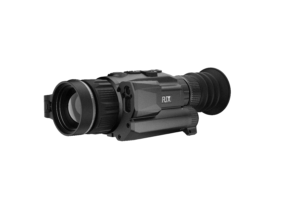
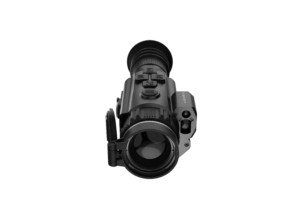
Todd Huey’s best bang-for-the-buck 1280 thermal pick. The RIX LEAP L12R combines premium 1280×1024 imaging with an ultra-wide 2× base view that makes it exceptionally versatile from thick vegetation and close-range hog hunting to open-country shooting.
- 1280×1024, 12µm sensor with NETD <15mK
- Ultra-wide 14.6° × 11.7° field of view at 2×
- 2×–6× continuous ocular magnification
- 2560×2560 AMOLED display
- Built-in 1,312-yard LRF & ballistic calculator
- 3,390-yard manufacturer-rated detection range
- Todd’s take: If absolute image quality is the priority, I choose the DBH D12. If I want a wide 2× view, excellent versatility and the best value I’ve found in a 1280 thermal, I choose the LEAP L12R.
Lone Star Boars Article on the Leap 12R
The RIX LEAP L12-R was named the Lone Star Boars / Huey Outdoors Best Value 1280 Thermal Scope for 2026 in our field-tested guide to the best thermal scopes for hog hunting.
Wondering what the extra resolution actually gives you? Read our complete 640 vs. 1280 thermal scopes comparison, covering field of view, magnification, digital zoom, lens design, image detail, and cost.
The RIX LEAP L12R is the 1280 thermal scope I recommend when you want premium image quality without giving up an ultra-wide field of view.
Its 2× base magnification and 14.6° × 11.7° field of view make it especially useful for hunters who may encounter animals at close range, hunt around thicker vegetation, or move between tight woods and large open fields. Yet the L12R still gives you enough magnification capability to reach much farther when necessary. RIX pairs its 1280×1024 sensor with a 60mm F1.0 objective, sub-15mK NETD and a 2560×2560 AMOLED display.
For me, the L12R is currently the best value I have found in a premium 1280-resolution thermal riflescope.
During the summer, vegetation here in Texas gets thicker and grass gets taller. That changes the way I hunt.
Animals may appear much closer, sight lines become shorter, and a narrow field of view can make it difficult to find or stay on moving hogs.
That is where the L12R really shines.
At its 2× base magnification, it gives me an extremely wide view of the field. I can see considerably more of what is happening around the animal instead of feeling like I am looking through a tunnel.
That combination made the L12R my preferred thermal scope through the summer.
For the way I hunt, that wide view can be more useful than simply having higher base magnification.
These are two excellent 1280 scopes, but I don’t think they should be purchased for exactly the same reason.
If someone asks me:
“What thermal scope has produced the best image you’ve personally seen?”
My answer is the DBH D12.
It starts at 3×, has a 75mm objective, and still provides an unusually good field of view for a 3× thermal. When absolute image quality is my first priority, the D12 wins for me.
If someone asks:
“What’s your best bang-for-the-buck 1280 thermal and which one gives me the most versatility?”
My answer is the LEAP L12R.
Its 2× base view is better suited to situations where animals may suddenly appear close, while its magnification system gives me considerably more flexibility when the shot moves farther away.
That is why the L12R shouldn’t simply be thought of as a cheaper D12.
They solve different problems.
The L12R’s published field of view is:
14.6° × 11.7°
That works out to roughly 78 feet horizontally at 100 yards, which Outdoor Legacy also noted in its field review. Ep. 422 _ Rix Leap L12R __HIGH-…
That matters far more in the field than a specification table might suggest.
A wide field of view helps with:
And because the L12R starts with a 1280×1024 detector, you are starting with considerably more image information than a 640-class thermal before increasing magnification.
This feature deserves some clarification because RIX markets the L12R as having continuous 2×–6× optical zoom.
In actual use, I describe it as ocular zoom.
The rear throw lever changes how large the image appears through the eyepiece/display. It gives you a smooth range from approximately 2× to 6× rather than forcing you into the large magnification jumps common with conventional step-based digital zoom.
The L12R also has separate digital magnification available beyond that. In my review, I found the ocular adjustment particularly useful because I could increase apparent magnification without immediately taking the same image-quality hit I normally associate with relying entirely on digital magnification. RIX LEAP 12R SUB $7K 1280 THERM…
RIX’s official specification calls this “2–6× true optical zoom.” I use the term ocular zoom because that better describes what I experience at the eyepiece and distinguishes it from a conventional variable optical system that changes objective focal length through moving lens groups.
Either way, the practical benefit to the hunter is the same:
You can smoothly choose the amount of magnification you actually need instead of immediately throwing away field of view and source resolution with a large digital jump.
The L12R uses a:
RIX also pairs that detector with a 1.03-inch 2560×2560 AMOLED display.
In my own testing, image quality has been excellent.
I also found it to perform particularly well in high humidity, which matters considerably more to me than how impressive a scope looks under perfect demonstration conditions.
That does not turn either review into a laboratory comparison of every thermal on the market. It does give you two field-based assessments pointing toward strong performance under difficult conditions.
The L12R integrates the laser rangefinder into the front lens assembly instead of hanging a large separate module off the side.
RIX lists:
Maximum LRF range: 1,312 yards
Manufacturer-rated detection range: 3,390 yards
Those numbers describe different things and should not be confused. Detection range is not identification range, and neither is a recommended shooting distance.
The rangefinder feeds the onboard ballistic calculator, which supports multiple ballistic profiles.
For someone shooting at varying distances, that is considerably more useful than simply knowing an animal is “a long way out.”
The L12R uses a combination of turret-style controls and buttons rather than putting a large row of buttons around the eyepiece.
You get dedicated controls for functions such as:
This is one of those areas where there is no universally correct answer.
Choose the control style you prefer using in the dark.
The L12R combines:
RIX rates the combined system for approximately 6.5 hours at 72°F, and the scope supports USB-C charging.
That hybrid design gives you the convenience of internal power while retaining the ability to carry additional 18650 batteries in the field.
I think the L12R is particularly well suited to someone who says:
“I hunt several different environments and don’t know whether my next shot will be 50 yards or several hundred.”
It’s an especially strong option if you:
I would move toward the DBH D12 if:
The D12 does not make the L12R obsolete.
For me, the decision is:
DBH D12 → best image.
LEAP L12R → wider 2× view, greater close-to-long-range versatility, and best bang for the buck in a 1280 thermal.
| Specification | RIX LEAP L12R |
|---|---|
| Thermal sensor | 1280×1024 VOx |
| Pixel pitch | 12µm |
| Thermal sensitivity | NETD <15mK |
| Refresh rate | 60Hz |
| Objective | 60mm F1.0 |
| Base magnification | 2× |
| RIX-listed zoom | 2×–6× continuous |
| Digital zoom | Up to 8× additional digital zoom |
| Field of view | 14.6° × 11.7° |
| Display | 1.03″ 2560×2560 AMOLED |
| Detection range | Up to 3,390 yards |
| Laser rangefinder | Up to 1,312 yards |
| Internal storage | 64GB |
| Video/photo resolution | 1280×1280 |
| Battery | 18650 + built-in rechargeable battery |
| Rated runtime | Approx. 6.5 hours at 72°F |
| Protection | IP67 |
| Weight | Approx. 3 lb |
| Warranty | 5 years |
Manufacturer specifications: RIX.
RIX currently lists the package with the:
Exact packaged accessories can change, so the current box contents should be confirmed at time of purchase.
Your existing YouTube embed should stay right here in the page.
The surrounding text should link to:
Todd Huey’s RIX LEAP L12R Field Review — Lone Star Boars
And your video:
Watch Todd’s RIX LEAP L12R review on YouTube
Not universally.
In Todd’s experience, the DBH D12 produces the better absolute thermal image. The L12R provides a wider 2× starting view, excellent versatility and a substantially lower purchase price.
Choose based on how and where you hunt rather than assuming the more expensive model is automatically right for you.
No.
Its 2× base magnification gives it an excellent close-range and scanning view, while the ocular magnification system and additional digital zoom provide considerably more magnification when necessary.
A wider field of view makes it easier to find animals, follow moving targets and understand what is happening around them.
This becomes especially useful in thick summer vegetation, woods and situations where animals may appear close.
Todd’s field experience with the L12R has been very positive in high humidity. RIX also promotes image processing intended to improve visibility in moisture, fog and humid conditions. Individual conditions still vary.
Yes. RIX rates the built-in LRF to 1,312 yards and includes onboard ballistic calculation.
Full Specifications:
| Category | Specification | LEAP L12 R |
|---|---|---|
| Model | Model | LEAP L12 R |
| Sensor Specifications | Resolution, pixels | 1280×1024 |
| Pixel Pitch | 12 μm | |
| NETD | <15 mK | |
| Frame Rate | 60 Hz | |
| Optical Specifications | Objective Lens | 60 mm |
| Optical Zoom | 2.0~6.0× | |
| Field of View (HxV) | 14.6°×11.7° | |
| Digital Zoom | 1~8x | |
| Eye Relief | 50 mm | |
| Diopter Adjustment | -5~+5 D | |
| Detection Range | 3390 yd | |
| Display Specifications | Type | AMOLED |
| Resolution, pixels | 2560×2560 | |
| Laser Rangefinding | Max. Measuring Range | 1312 yd |
| Measurement Accuracy | ±1.09 yd | |
| Video Recorder | Video / Photo Resolution, pixels | 1280×1280 |
| Video / Photo Format | .mp4/.jpg | |
| Built-in Memory | 64 GB | |
| Physical Specifications | Degree of Protection, IP code | IP67 |
| Operating Temperature Range | -4~+122 °F | |
| Dimensions | 15.5×3.8×3.3 inch | |
| Weight | 2.8 lb | |
| Connections and Compatibilities | Battery Type | 18650 |
| Wi-Fi | √ | |
| Operating Time on Battery Pack (at t=72°F) | 6.5 h | |
| External Power Supply | 5 V (Type C USB) | |
| Max. Recoil Power on Rifled Weapon (Eo) | 1000 g / 6000 J | |
| Compatible Mounts | 30 mm rings |
The LEAP L12R is my current best bang-for-the-buck choice in a premium 1280 thermal riflescope, particularly for hunters who value a wide field of view and the ability to adapt from close-range conditions to much longer distances.
If you’re deciding between the LEAP L12R, DBH D12, or another thermal, call Huey Outdoors 817-668-1001 and tell us where you hunt, your typical distance, your terrain and what matters most to you.
I’d rather help you buy the right scope than simply sell you the most expensive one.