

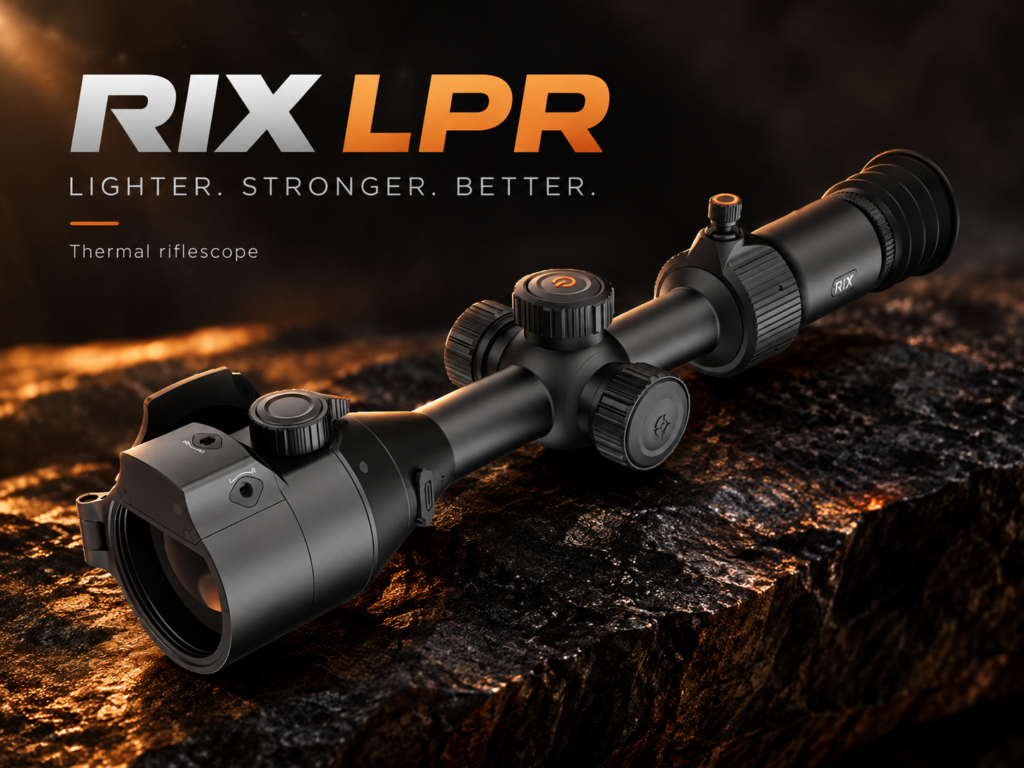
The RIX LPR L6R and LEAP L6R share a familiar tube-style design, a 50mm objective lens, optical eyepiece magnification, and an integrated laser rangefinder. The differences are in what you see through them, how they handle, and the features each one brings to the field.
My take after using both: the LPR has the advantage in weight, image quality (its a substantial difference), viewing experience, and ease of operation. The LEAP L6R has been discontinued but is on sale for $3,399 a substantial savings while supplies last.
This comparison draws on the measurements and observations in my LPR L6R field review, alongside RIX’s published specifications. The measured weights below are for my complete setups; the other numerical specifications are manufacturer ratings.
| Feature | LEAP L6R | LPR L6R |
|---|---|---|
| Thermal sensor | 640×480 | 640×512 |
| Thermal sensitivity (NETD) | <20 mK | <12 mK |
| Objective lens | 50mm F0.9 | 50mm F0.9 |
| Frame rate / pixel pitch | 50 Hz / 12 μm | 50 Hz / 12 μm |
| Optical eyepiece magnification | 2.8–8.4× | 3–9× |
| Digital zoom multiplier | 1–4× | 1–4× |
| AMOLED display resolution | 1920×1080 | 2560×2560 |
| Maximum laser ranging distance | 1,312 yards | 2,187 yards |
| Mechanical rangefinder alignment | Fixed | Adjustable |
| Built-in environmental sensors | No | Temperature, humidity, air pressure |
| Battery format | 18650 | 21700; compatible 18650 with adapter |
| Manufacturer-rated runtime | About 4 hours | About 5.5 hours |
| Video recording / storage | 1280×720 / 32 GB | 1280×1280 / 64 GB |
| My measured setup, with mount and battery | 3.36 lb | 2.48 lb |
Specifications checked October 29, 2026. RIX currently lists the LEAP L6R sensor as 640×480 and the LPR L6R as 640×512. This comparison is specifically with the LEAP L6R; other LEAP models have different specifications. Battery runtime and maximum ranging distances are ratings, not results of a controlled test of my two scopes.
Both are in the 640-resolution class. The LPR hes a much more sensitive 12mk sensor with a much better 2560×2560 screen. Those two upgrades combined blow the LEAP L6R out of the water.
RIX rates the LEAP below 20 mK NETD and the LPR below 12 mK. NETD describes sensitivity to small temperature differences. The lower published NETD rating gives you a more detailed image, and really shines when temperatures and weather conditions are close to the animals heat signature. Basically you can see much better with the LPR.
My LPR footage includes a hunt in approximately 82% humidity with fog in low areas. It retained useful animal and background detail. The LPR will outperform the LEAP in every condition.
Comparison takeaway: I preferred the LPR’s image in my side-by-side viewing. The specification change helps explain that preference, but it does not replace looking at actual footage and the view through each eyepiece since the video out really only shows you the improved sensor resolution not the improved screen. You actually have to look through it to see the improved screen
The LEAP uses a 1920×1080 AMOLED display. The LPR uses a larger 1.03-inch, 2560×2560 AMOLED display. Through the LPR’s eyepiece, I found the image larger and easier to evaluate.
The optical eyepiece range changes from 2.8–8.4× on the LEAP to 3–9× on the LPR. Both also provide a separate 1–4× digital zoom multiplier. That means you can digitally zoom on top of the ocular zoom. When using ocular zoom the 2560×2560 screen has the clear very noticeable advantage. We are not talking about a slight upgrade, this is significant.
On both platforms, optical eyepiece magnification enlarges the displayed image. It does not increase the thermal detector’s native resolution. Likewise, the LPR’s 2560×2560 screen does not make it a 2560-resolution thermal sensor, but it gives you more pixels to zoom in and and retain a good image.
Comparison takeaway: the LPR gives me a much better, more comfortable, spacious view. Recorded video cannot fully reproduce the difference you see through the eyepiece.
With a mount and battery included in each measurement, my LEAP L6R setup weighed 3.36 lb and my LPR L6R setup weighed 2.48 lb. That is a difference of 0.88 lb, or approximately 14.1 ounces—about 26% of the LEAP setup’s weight.
Those numbers describe the two setups on my scale. Their mounts and batteries were not identical, so they are not a controlled comparison of the bare housings. RIX separately describes the LPR’s magnesium platform as approximately 30% lighter than the earlier LEAP platform.
In use, I appreciated having less weight to carry. I also preferred the LPR’s top-mounted focus control and smoother optical eyepiece adjustment. The LEAP’s controls are usable, but the LPR required less effort from me.
Comparison takeaway: reduced carried weight and easier controls were practical differences I could notice throughout a hunt.
Both scopes already include laser ranging and ballistic calculation. RIX rates the LEAP’s maximum ranging distance at 1,312 yards and the LPR’s at 2,187 yards.
The more distinctive change is the LPR’s mechanically adjustable ranging point. The LEAP uses fixed alignment; the LPR allows alignment to a selected reference zeroing profile. That is a feature difference between the two, not a claim that every profile automatically shares the same alignment.
The LPR also adds built-in temperature, humidity, and barometric-pressure sensors that supply environmental information to its ballistic calculator. Those integrated environmental measurements are absent from the earlier LEAP platform.
Comparison takeaway: the LPR offers more flexibility in its ranging system and more integrated environmental information. A longer maximum ranging specification does not establish an animal-identification distance.
The LEAP runs on a replaceable 18650 battery, with RIX listing about four hours of operation. The LPR uses a larger 21700 battery and is rated for about 5.5 hours. It also accepts a compatible 18650 battery through the supplied adapter sleeve.
Both support USB-C external power. The LPR’s adapter gives existing LEAP owners some flexibility with compatible batteries they already have.
These are manufacturer runtime figures under specified conditions. I did not conduct a controlled battery rundown of both scopes, and temperature, battery condition, and feature use can affect actual runtime.
Comparison takeaway: the LPR offers the higher rated runtime and an additional battery-format option.
The LEAP records 1280×720 video and has 32 GB of internal storage. The LPR records 1280×1280 video and doubles storage to 64 GB.
That gives the LPR more recording space and a square video format. The recording dimensions still describe the saved file, not the thermal detector’s native resolution.
There is also a limit to what either recording can demonstrate: optical eyepiece magnification happens in the viewing optics. Onboard footage does not show that effect the way your eye sees it. In my review, I used a phone behind the eyepiece to help demonstrate the difference.
Comparison takeaway: the LPR has the more generous recording package, while the direct eyepiece view remains important when judging the two.
I would lean toward the LPR L6R everything is just better with the LPR. It wins in every category that counts image quality, bad weather performance, features, weight. The only con is price while the discontinued LEAP is still available.
I would keep the LEAP L6R in consideration when its image and controls already satisfy the owner, or when a substantial price saving matters more than the LPR’s upgrades. Both retain the 50mm lens, optical eyepiece magnification, integrated ranging, and familiar tube-style layout.
Compare the actual selling prices at the time of purchase. Clearance pricing can change the value calculation considerably, and an owner replacing a working LEAP faces a different decision from someone buying either scope for the first time.
For current LEAP pricing and availability, see the RIX LEAP L6R product page at Huey Outdoors.
For current LPR pricing and availability, see the RIX LPR L6R product page at Huey Outdoors. For the fuller account of my testing and field observations, read RIX LPR L6R Review: Lighter, Stronger, Better in the Field.
The existing video provides the field footage and demonstrations behind my observations in this comparison.

Manufacturer specifications: RIX LEAP L6R and RIX LPR L6R. Personal measurements and viewing observations come from my previously published field review. This article brings those findings together by comparison category; it does not represent a separate new test.
About the author: Todd Huey, Huey Outdoors and Lone Star Boars.