

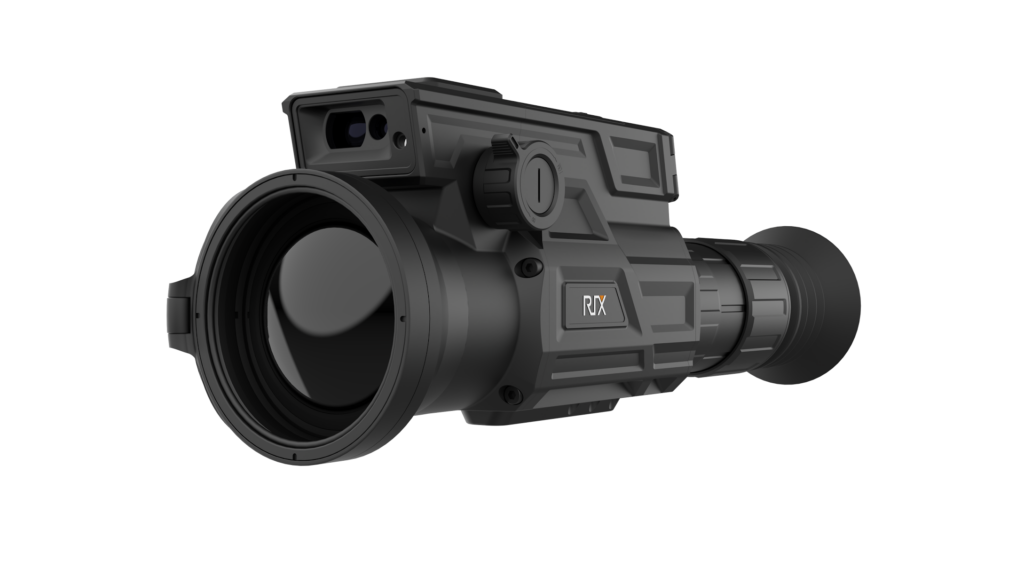
If you already know the RIX DBH D6, the first thing you’ll recognize in the D6 Pro is the improved clarity. Both the D6 and D6 PRO start at 3× native magnification, both use a 60 mm lens and have the same field of view. What stood out to me was the extra detail inside that view. Where the original D6 blended several close shades of gray together, the Pro showed finer texture.
Two changes help explain that difference. RIX gave the Pro a wider lens aperture and improved its thermal sensitivity rating. The other change is physical. The Pro’s magnesium-alloy housing brings the listed weight down by about a third of a pound.
| Specification | Original DBH D6 | DBH D6 Pro |
|---|---|---|
| Thermal sensor | 640 × 512 pixels, 12 μm pitch | 640 × 512 pixels, 12 μm pitch |
| Thermal sensitivity (NETD) | ≤20 mK | ≤12 mK |
| Objective lens | 60 mm, f/1.0 | 60 mm, f/0.9 |
| Base magnification | 3× | 3× |
| Field of view | 7.3° × 5.8° | 7.3° × 5.8° |
| Sensor refresh rate | 60 Hz | 60 Hz |
| OLED display | 2560 × 2560 pixels | 2560 × 2560 pixels |
| Listed weight | 2.90 lb | 2.57 lb |
| Rated battery life at 72°F | 8 hours | 8 hours |
Specifications are from the RIX DBH D6 User Manual v1.2, printed pages 3–5, and the RIX DBH D6 Pro User Manual, printed pages 2–5.
The difference is easiest to appreciate when there’s little temperature contrast. A strong temperature change already gives the original D6 a clear edge in the image. The Pro’s advantage shows up in smaller changes within a surface. Something that looks like one fairly even shade on the D6 can show several distinct tones on the Pro. Those differences give the image more texture.
NETD is the spec that speaks most directly to that. It describes how small a temperature difference a thermal system can distinguish against its own noise under test conditions. RIX rates the original D6 at 20 millikelvins or less and the Pro at 12 or less. The aperture matters, too. At the same 60 mm focal length, the Pro’s f/0.9 opening lets more infrared energy reach the detector than the D6’s f/1.0 opening, all else equal.
Both models cover 7.3° horizontally and 5.8° vertically at their 3× base magnification. If you’re used to how much of a scene fits in the original D6, the framing will feel familiar on the Pro. Both detectors also refresh 60 times per second. The change you’re seeing is in the detail within each frame.
The two resolution numbers on the spec sheet describe different parts of the system. The 640 × 512 detector samples the thermal scene. The 2560 × 2560 OLED displays the result at the eyepiece. The pixel counts match across the two models. Thermal sensitivity helps explain how one can still show finer differences in tone.
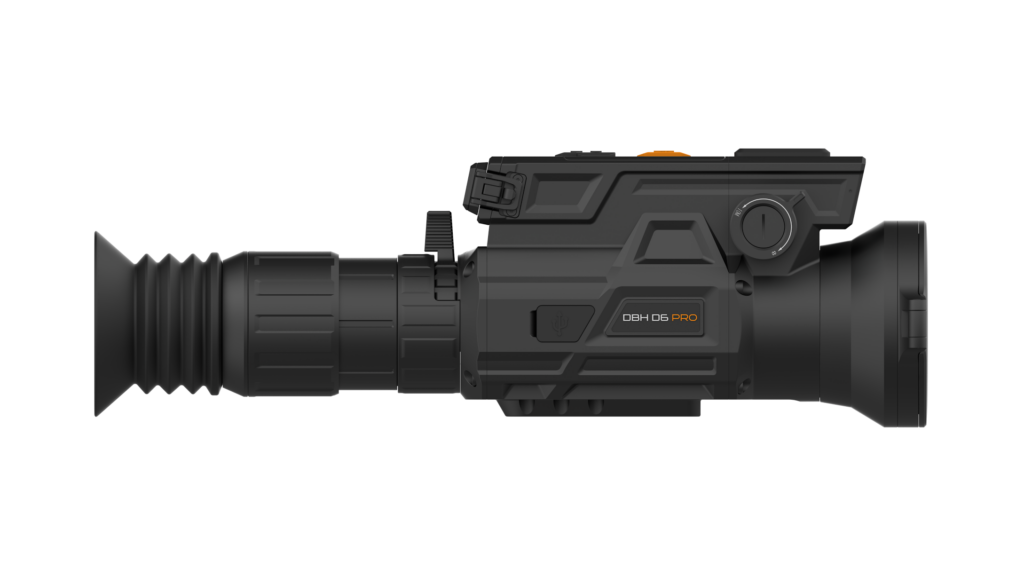
RIX lists the original D6 at 2.90 pounds and the Pro at 2.57 pounds. That works out to 5.3 ounces less, or about 11 percent of the original’s weight. RIX also enlarged the Pro’s control buttons, which makes them easier to feel with gloves on.
That reduction in weight comes with the same published battery-life rating. Both models use two 18650 batteries, and RIX rates each at eight hours at 72°F.
The biggest change I noticed was the way the Pro separates fine detail in low-contrast areas. You get that improvement with the same 3× starting view and 60 Hz refresh rate that the D6 already offered. The weight difference is the other one you’ll notice as soon as you pick it up.